
This blog post originally appeared in 2018 on my website dealing with Royal Signals honours and awards. With the closure of that site I have updated it (substantially) and moved it here. More details on the casualties may be found in the blog post about Manzai Fort cemetery.
Operations in Waziristan and elsewhere on the North-West Frontier of India, earned for Royal Signals some of its very first awards for gallantry—the earliest in the 1920s are dealt with in the chapter of the book that deals with the Meritorious Service Medal for gallantry.
By 1924 conflict in the region had largely abated but a British and Indian Army garrison remained to piquet the roads that had been built between small population centres as a means of increasing control of the tribal area. Such duties were not without danger. On 18 August 1924, during a road opening operation north of Razmak Narai, near Duncan’s Piquet, a vehicle carrying a small Royal Signals party from Razani was ambushed below the picquet. In the action that followed, Lance Sergeant Percy Cook, aged 23, was killed and Signalman C. Punter and an Indian signaller were wounded.[1] This incident was the subject of the Corps painting Frontier Ambush by Peter Archer.[2]

The grave of Lance Serjeant Percy Everitt Cook, Razmak
Less well known, certainly in Royal Signals, is a much larger ambush in 1937 that claimed the lives of two Royal Signals soldiers and over 70 others killed and wounded.

Mirza Ali Khan, The Faqir of Ipi
In 1936 anti-colonial rebellion in the North-West Frontier was fuelled largely by the rhetoric of a Tori Khel Wazir, Mirza Ali Khan, known as the Faqir of Ipi. Initial operations in 1936 were successful in deterring rebellion but in response to increasing unrest, operations in the Khaisora valley against the Tori Khel at the end of the year—aimed at restoring peace and demonstrating the government’s determination to maintain peace—were strongly opposed. Withdrawal of the two columns greatly increased the Faqir’s influence.
In early 1937 raids were becoming larger and more numerous, and on 6 and 7 February two British officers were ambushed and murdered.[3] As the situation deteriorated, reinforcements were brought into the region until, by September, Wazirforce comprised two divisions—Waziristan Division and 1st Indian Division. The force totalled seven brigades—the three Waziristan brigades reinforced by 1st (Abbottabad), 2nd (Rawalpindi), 3rd (Jhelum), and 9th (Jhansi) Infantry Brigades, and a commensurate number of artillery, sapper, and logistic units. At its height there were over 60,000 British, Indian and irregular troops in the region.
The scale and complexity of the communications required to support the force and its mobile operations resulted in major deployment. ‘A’ Corps Signals, Waziristan District Signals, and 1st Indian Divisional Signals were supported by detachments from ‘B’ Corps Signals, 3rd Indian Divisional Signals, 2nd Indian Cavalry Brigade Signal Troop, and Kohat District Signals.[4] In general, cable was used in the rear areas and along lines of communication (although these areas were not immune to the destruction and theft of the cable runs), wireless was most important in the forward areas (considerable expertise was developed in dealing with the climatic and geographical challenges of the region), and dispatch riders proved invaluable. The Waziristan operations of late 1936 and to the end of 1938 earned Royal Signals a considerable number of awards, including three Military Medals. One of these was to Signalman Marcel Hooper, who was later commissioned and earned an MBE in India as the Assistant Commandant of the Special Armed Constabulary in Central Province and Berar; his medals are shown in the gallery below.
 Throughout the operations of 1937 the rebellious tribes mounted large and successful attacks on road protection troops and convoys. On the early morning of 9 April 1937, a convoy set out from Manzai fort destined for the garrison at Wana carrying supplies and some officers and men returning to their units. The convoy was a large one, comprising forty-nine lorries (mostly from No. 30 (Independent) Mechanical Transport Section, Royal Indian Army Service Corps, based at Manzai), an ambulance, and three private cars, all escorted by four armoured cars (8th Light Tank Company, Royal Tank Corps), with a company of infantry in lorries (from 4th Battalion (Bhopal), 16th Punjab Regiment) and a lorried detachment from Waziristan District Signals. One of the armoured cars was at the front, another at the rear, and two more were amongst the transport. Similarly, the infantry in their lorries were distributed along the length of the convoy. Amongst the convoy were officers and men from various units returning to Wana after a period of leave, including a party from No. 2 Field Company, King George V’s Own Bengal Sappers and Miners.
The long snake of lorries wove its way uneventfully past Jandola and then westward onto the Jandola-Wana road. At about 7.40 am it was ambushed at the western end of the Shahur Tangi, a narrow, steep-sided, three-mile long gorge, eight miles west of Jandola. There, having been slowed by camels let loose on the road, the convoy was attacked by a large party of Mahsuds and Bhitannis, who had occupied positions on the precipitous hillsides.

Exit of the Shahur Tangi
The leading armoured car and first three trucks, having passed out of the gorge, were not attacked directly and sped to the next manned outpost, carrying news of the attack; the armoured car subsequently returned to the fight. Meanwhile, the lorries at the front of the convoy in the gorge were disabled when their drivers were killed, trapping the others behind. Raiders hidden in the rocks close to the road attacked the convoy along its length causing very heavy casualties but, although some trucks were looted, the armoured cars, the infantry escort from 4/16th Punjab Regiment and the other troops with the convoy fought most gallantly and prevented the convoy from being overrun. An aircraft providing support overhead was badly damaged and forced to land. Reinforcements from 4/16th Punjab Regiment and the South Waziristan Scouts arrived later in the day and fighting continued sporadically until nightfall. In the evening as the firing lessened the lorries that could be moved were either sent on to Sarwakai or back to Chagmalai at the entrance to the Shaur Tangi and the wounded were evacuated—the withdrawal of the South Waziristan Scouts to Chagmalai was particularly heavily contested by the raiders. By the following morning the attackers had gone and by the afternoon on 10 April all of the vehicles that had not been destroyed had been recovered and either sent on to Wana or back to Manzai.
The detachment from Waziristan District Signals was commanded by Corporal Edward Turner. The lorry was driven by an Indian soldier and carried four Royal Signals soldiers and another Indian signalman. In the morning’s battle, Turner and Signalman Norman Davies were killed, the Indian driver (Signalman Joseph) and Signalman Thomas Bowkett were wounded, the latter severely, but three other men, Signalmen Bartlett and McKenna and an Indian soldier, escaped unscathed.[5]
In total, the attack claimed six British officers and two other ranks (Turner and Davies) killed, five British officers and one other rank (Bowkett) wounded, one Indian medical officer and 20 Indian other ranks killed, and 39 Indian all ranks wounded.[6] The bodies of the British casualties were recovered and buried at Manzai Fort cemetery. In accordance with tradition, the Indian casualties were cremated.

The graves of Corporal E. C. Turner and Signalman N. Davies
The gallantry of the British officers and soldiers who defended the convoy, and some of those who came to its rescue, was rewarded by one Distinguished Service Order, three Military Crosses, one Distinguished Conduct Medal and one Military Medal. Indian Viceroy commissioned officers, NCOs, and other ranks were rewarded with the two awards of the Indian Order of Merit, 2nd Class and seven Indian Distinguished Service Medals. For a list of these awards see here.
For a detailed account of the action see Chenevix Trench, C. P. (1984). The Frontier Scouts. London: Jonathan Cape. pp. 159-164.
-
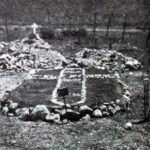
- The grave of Lance Serjeant Percy Everitt Cook, Razmak
-

- Memorial to Lance Sergeant P. E. Cook
-

- Mirza Ali Khan, The Faqir of Ipi

-

- Exit of the Shahur Tangi
-
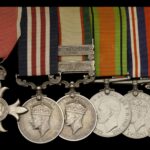
- The medals of Major M. G. Hooper MBE, MM Royal Signals
-

- The medals of Sergeant T. Bowkett
1. (Back) 1856992 Lance Corporal (Acting Lance Sergeant) Percy Everitt Cook, ‘C’ Divisional Signals, serving with Signals Tochi and Khaisora Area. He was buried in Razmak cemetery and a memorial may be seen on his mother’s grave at Broadway Cemetery, Peterborough. The wounded Royal Signals soldier was 2307047 (formerly 625793) Signalman (later Corporal) Cecil Punter, ‘G’ Divisional Signals.
2. (Back) The painting hangs in the Headquarters Officers’ Mess at Blandford.
3. (Back) Captain John Anthony Keogh, 1st Battalion, 12th Frontier Force Regiment, attached to the South Waziristan Scouts; and Lieutenant Ronald Nicholson Beatty, 10th Duke of Cambridge’s Own Lancers (Hodson’s Horse), attached to the Tochi Scouts and serving as the Officiating Assistant Political Agent for North Waziristan. Keogh’s orderly was also killed, as were two Indian levies travelling with Beatty.
4. (Back) Royal Signals and the Indian Signal Corps were inextricably linked from the formation of Royal Signals in 1920. From Honours, Decorations, and Medals to The Royal Corps of Signals for Gallantry & Distinguished Service 1920-2020:
‘Officer posts were filled by Royal Signals and, commonly, by seconded officers from other regiments. As time went by, the latter either transferred to Royal Signals or returned to their parent regiment, in much the same way for officers seconded to Royal Signals in the same period. British other ranks (no more than one-third of the unit establishments) came from Royal Signals or were attached regimental signallers; all were held on the Indian Unattached List. Until 1927, when Royal Signals assumed responsibility for the provision of all British other ranks, some attached signallers transferred to Royal Signals, some remained ‘attached’, and others returned to their parent regiment. In that year all attached other ranks were transferred to the Royal Signals Special Roster (India). During the Second World War the Indian Signal Corps was greatly expanded and units served in the Middle East, East Africa, Italy, Iraq, Iran, Burma, Malaya, Singapore and on the North-West Frontier. The partition of India in 1947 did not immediately result in all Royal Signals officers and soldiers being withdrawn and some served in positions in the Indian and Pakistan armies until the mid-1950s. In consequence, because of the inseparable link with Royal Signals all awards to personnel in units of the Indian Signal Corps are included in one form or another, either in the Register of Awards (i.e. Royal Signals all ranks or those personnel who transferred to Royal Signals) or in the various appendices in the case of all ranks of the Indian Signal Corps. In short, recounting the history of Royal Signals without including the part played by the Indian Signal Corps is telling only a portion of the story. These arguments apply equally to Burma Army Signals.’
5. (Back) 2316052 Corporal Edward Cooper Turner and 2324234 Signalman Norman Davies. The latter is recorded on the Royal Signals Roll of Honour as ‘Signalman C Davis’.
2324319 Signalman Thomas Bowkett recovered from his wounds in England before returning to India to join ‘A’ Corps Signals. During the Second World War he served as the section sergeant of ‘M’ Section, 6th Airborne Divisional Signals; he was wounded in action by mortar fire in the breakout from Normandy on 25 June 1944. On 25 March 1945 Sergeant Thomas Bowkett died of wounds received the previous day during Operation Varsity, the crossing of the River Rhine. Originally buried in a cemetery at Gildern-Kappellen, his remains were reinterred in Reichswald Forest War Cemetery on 19 November 1946.
The wounded Indian Signal Corps driver was 8880 Signalman Joseph.
6. (Back) In addition to the Royal Signals personnel, those known to be casualties were:
Killed in action or died of wounds:
Major Henry William Dayrell Palmer, 3rd Battalion, 16th Punjab Regiment.
Captain Myles Bertram Courtney, 3rd Battalion, 16th Punjab Regiment.
Captain Nisar Muhamad Durrani, Indian Medical Services, Combined Indian Military Hospital, Wana.
Lieutenant Michael Earle, Royal Regiment of Artillery, 2nd (Derajat) Mountain Battery (Frontier Force).
Lieutenant Eric Charles Langford Hinde, Corps of Royal Engineers, 19th Field Company, Royal Bombay Sappers and Miners.
Lieutenant Edwin Stuart Rainier France, 3rd Battalion (Duke of Connaught’s Own), 7th Rajput Regiment.
Second Lieutenant George Laurence Scott, 3rd Royal Battalion (Sikhs), 12th Frontier Force Regiment.
Twenty Indian other ranks were killed in action or died of wounds.
Wounded:
Major Alexander Paton MC, Royal Regiment of Artillery, 2nd (Derajat) Mountain Battery (Frontier Force).
Major Thomas Zachariah Waters MC, Royal Indian Army Service Corps.
Captain Stanley Davison Wilcock, 1st Battalion, 16th Punjab Regiment, attached to the South Waziristan Scouts.
Lieutenant Frank Douglas Robertson, 1st Kumaon Rifles, 19th Hyderabad Regiment, attached to the South Waziristan Scouts.
Second Lieutenant Lionel Henry Mosse Parsons, Probyn’s Horse (5th King Edward VII’s Own Lancers). (See the citation for the Distinguished Conduct Medal to Lance Corporal A. Williams, 8th Light Tank Company.)
Subadar Abdul Rahman, 3rd Battalion, 16th Punjab Regiment.
Subadar Dalip Singh, No. 30 (Independent) Mechanical Transport Section, Royal Indian Army Service Corps.
Thirty-seven Indian other ranks were wounded.
You may be interested in these two articles
One on my father colonel Hrc petty and the other of my grandfather on my mother’s side brigadier frank maynard
It Seemed Very Ordinary
Colonel Hugh Pettigrew
DR ROBERT LYMAN MBE
Every now and again in my research I come across lives that are anything but ordinary. One such was the late Colonel Hugh R. C. Pettigrew, who was the chief staff officer (GSO1) to Major General Punch Cowan in the fabulous 17th Indian Division in the final year of the war. I captured some of his insights in the fighting in A War of Empires.
Over the years I have come to understand something of this remarkable man and his life and service during the the dying days of empire. His life encapsulates that of many such colonial servants and soldiers. Born on the 5th of May 1912 in Shiraz, Persia, he was the youngest of six children. His father – William Pettigrew – ran the Persian operation for the Indo-European Telegraph Department in Persia. In 1895 he married Ada Lancefield Blackman but died in 1915 while held captive in Ahram, a primitive fort of the Tangistani tribesman in south Persia, near Bushire. His father’s death and experience is described in On the Frontier and Beyond: A Record of Thirty Years’ Service (London: John Murray, 1931) by Colonel Fredrick O’Connor.
The Graphic periodical in 1897 published this fascinating article on Hugh’s extraordinary aunt.
Hugh’s mother is the lady on the right; her sister, on the left, married Abdullah Hussein Khan
At 18 Hugh Pettigrew was sent to Sandhurst as a King’s India Cadet, like his three brothers before him. He was largely self-taught but managed to passed out the Royal Military College 34th out of 174. The only regret he had at Sandhurst was not winning the Norman Gold Medal issued to the top student entering the Indian Army. This medal went to his best friend, Hugh Rance. Pettigrew always claimed it was his inability to ride that cost him the medal. He was commissioned into the Indian Army in 1932. He was attached to the Gordon Highlanders, first on the Khyber Pass then with them at Peshawar, from 1932-33, after which he joined his Indian Army regiment, the 2nd/14th Punjab Regiment, at Mir Ali, Kohat, and then Bannu, on the Indian North West Frontier, where he served between 1933 and 1937. During this period he discovered that the regiment really wanted him for his skills on the hockey field, and he found himself playing with Dyan Chand who is, even now, considered the greatest hockey player of all time. He always said it was the greatest privilege to play with “the great man”, firstly at inside right and then as centre half and captain for nearly 5 years.
Dhyan Chand sitting to Pettigrew’s left
In April 1937 he joined the South Waziristan Scouts, being first posted to the first wing in Sararogha. He served in Waziristan until 1938 where he was involved in many actions against the Mahsud tribesman, which he described in Frontier Scouts (1964). He arrived on the day the Mahsuds attacked a convey, which became known as the Shahur Tangi ambush. His future father-in-law, Brigadier Frank Maynard, who was stationed at Bannu as commander of the Bannu Brigade, and later commanded the Waziristan Division, knew immediately of this ambush but did not tell his daughter Patricia until he knew Hugh Pettigrew was safe.
In 1939, after marrying Patricia Maynard, he re-joined his regiment which was stationed near Dacca, now the capital of Bangladesh. It was here that he had a piece of great good fortune. Despite being adjutant of the regiment he was appointed as a Company Commander and instructor at the Officers’ Training School in Belgaum. His regiment was sent to Hong Kong where their fight with “the Japs”, as he referred to them, may have cost him his life or, at best, to have become a prisoner of war. He was then sent to be Brigade Major of the 63rd Indian Infantry Brigade in the Naga Hills at Kohima, and then to Imphal, from February 1942 to July 1943. Fascinatingly, he climbed Mt Japfu while on exercise in Kohima. As Brigade Major he was responsible for establishing intensive training methods in jungle warfare to ensure that the Brigade was ready to fight the Japanese. He then became an instructor at the Staff College at Quetta (until December 1944) with the rank of Lieutenant Colonel before being appointed GSO1 to Major General ‘Punch’ Cowan of the all-Gurkha 17th Division (“The Black Cats”) from December 1944 to June 1945. This period of time is described brilliantly in his memoir, It Seemed Very Ordinary (2017).
On Mt Japfu, 1943
After Burma he served in Army HQ Delhi in the Directorate of Weapons and Equipment, when Field Marshal Auchinleck was C-in-C, and was promoted to full Colonel. In 1947 he retired from the Indian Army and returned to England.
Like many retiring army officers Hugh Pettigrew then became a school master, firstly as a partner and Assistant Head Master at Town Close House School in Norwich, and then at his own school in Selsey, West Sussex, coaching children for the Common Entrance Exam for entry into British private schools. He then undertook private tutoring until he retired in 1980.
Hugh and Patricia Maynard had six children: Paul (b.1939), Mark (b.1942), Jane, their only daughter (b.1944), David (b 1947), Clive (b.1950) and Jeffrey (b.1952).
His passion was writing. Although he never had the success of his direct contemporary, John Masters, I can attest to the quality of his writing in both the Frontier Scouts and It Seemed Very Ordinary. His private papers are in the Imperial War Museum, which also include an oral account given to them in 1994.
Hugh Pettigrew died in Wimbledon on 18th of April 2001. His ashes lie near the top of Great Gable in the Lake District.
Brigadier General F.H.Maynard CB, DSO, MC, ADC Gen
by Mark Pettigrew
The article in a recent edition of The Sirmooree, ‘Chukors and Pathans’, written by Bruce Jackman’s father about game shooting on the North-West Frontier in 1937, refers to a shoot being laid on for the Divisional Commander, at the request of the Commandant (possibly Tuker) as he was a very keen shot. However, because there was a complete absence of any game the shoot was abandoned. My grandfather Brigadier General F.H.Maynard CB, DSO, MC, ADC Gen (to King George VI), was I think the Divisional Commander being referred to. Not only was he very keen shot but at that time he was in temporary command of both Waziristan district and The Waziristan Division. In about 1975 Pat Kent, who had served under him in Waziristan, invited him to be guest of honour at the Delhi Day lunch which suggests that there must have been a tie between him and the 2nd Goorkhas.
My grandfather was born in Ottawa in 1882 into an illustrious Canadian dynasty. On his mother’s side his grandfather was Senator Robert Dickie of Nova Scotia, an eminent lawyer and politician as well as being one of the Canadian Fathers of Confederation. On his Father’s side of the family his grandfather was Captain Maynard RN, who was High Sheriff of Halifax County and related to The Honourable Lewis Morris Wilkins, one of the signers of the American Declaration of Independence
He entered The Royal Military College, Kingston, Ontario in 1898 at the age of 16 and was commissioned into The Indian Staff Corps in 1901. He proceeded to India and was attached briefly to the 2nd Battalion Oxfordshire and Buckinghamshire Light Infantry. He then joined his Regiment, the 25th Bombay Rifles, which became 125th Napiers Rifles as part of the reorganisation of the Indian Army under Lord Kitchener. He then served and trained in India until 1912 when he was posted to Moscow as Military Attaché. He met his future wife on the boat to Russia. She was on her way to take over as governess of two children from the Imperial Family. He became fluent in Russian and experienced life in Tsarist Russia just prior to the Revolution.
In 1913 the future Viceroy of India Field Marshall Lord Wavell GCB, GCSI, GCIE, CMG, MC, one of the few Russian ‘experts’ in the British Army, was in Moscow to attend the Russian Autumn Manoeuvres on behalf of The British War Office. He and my grandfather spent about a week together and became very friendly. My grandfather then left by train for England via Riga. Wavell left the same day also to return to England via Warsaw. In London my grandfather heard that Wavell had been arrested on his train and then released by the Russian Secret Police. They met in London to talk over the incident because Wavell was puzzled by the event and couldn’t offer any explanation. It later transpired that the Police had intended to arrest my grandfather as a spy but arrested Wavell instead by mistake. Apparently the daughter of a Russian General wanted to marry my grandfather and was rejected, so she reported him to the Russian Secret Police as a spy to try and keep him in Russia.
He returned to his Regiment in 1914, who were ordered to France. He was then on almost continuous active service apart from brief periods attending the Senior Officers School at Belgaum, being Commandant of The Small Arms School, Pachmari and Inspector of PT in India. My grandfather’s success and effectiveness in action comes as no surprise given his wide experience of warfare, summarised as follows:
October 1914 to July 1915 in action in France as Company Commander and Machine Gun Officer 125th Napier’s Rifles. On one occasion he spent an unprecedented 30 consecutive days in the front line supporting not only his own regiment but the 4th Battalion The Black Watch, the 4th Battalion The Suffolk Regiment and 57th Wilde’s Rifles at the Battles of Neuve Chapelle and Aubers Ridge.
July 1915 to December 1915 in Egypt as Company Commander in defence of the Suez Canal.
December 1915 to January 1916 in action in Mesopotamia. Severely injured in attack to relieve the British Garrison in Kut-el-Amara. Awarded MC and invalided back to UK.
1918-19 in Palestine. Commanded newly-formed 2/30th Punjabis in action as part of 60th Division at the battle of Megiddo. They broke the Turkish line to allow the Cavalry to pass through on their historic charge which resulted in the capture of Damascus.
1919 commanded 2/30th Punjabis in action in the 3rd Afghan War.
1920 to 1921 commanded 2/30th Punjabis in action in Waziristan as part of The Wana Column.
1924 commanded his Regiment the 5th Battalion 6th Rajputana Rifles (Napiers) and then briefly The Landi Kotal Brigade.
1933 to 1938 commanded Ahmadnagar Brigade on the NW frontier followed immediately by command of the Bannu Brigade/Tocol and the Waziristan Division.
While at Bannu between 1934 and 1938 he he led his brigade successfully in action on the North-West Frontier eight times. He also commanded the Waziristan Division in action on 3 occasions in August 1934, July 1935 and May 1937. Among these 11 actions the most famous was a Divisional night advance to contact onto the Sham Plain in pursuit of The Faqir of Ipi in May 1937. It succeeded in pushing The Faqir back into Afghanistan and became known as a classic of Frontier Warfare. John Masters describes, with obvious pride, the role of 4GR in this action in the final chapter of “Bugles and a Tiger”. To commemorate it a new service medal was granted to supersede the general service medal 1908. The ribbon consisted of three colours: red for the sun rising over the Sham Plain, khaki for the colour of the hills and green for the low scrub at the summit of the hills. For the outstanding leadership he demonstrated during this period he was awarded both the CB and the DSO in 1937. He was also mentioned in dispatches during his career 5 times. I have in my possession a letter from the then Chief of Staff India later Commander in Chief India Field Marshall Sir Claude Auchinleck GCB, GCIE, CSI, DSO, OBE, dated 20/5/1937:
‘My Dear Maynard,
May I offer you my heartiest congratulations on your CB which everyone was glad to see. I would also like to congratulate you very much for your show on May 11/12th. I have had the story in considerable detail from Mayne (General Sir Mosley Mayne GCB,CBE,DSO) who has just got back and I must say it gave me a good thrill. I am a bit of a night hawk myself as you may know. Yours was a grand affair which owes its success to your experience and determination. I wish I had been with you leading the advance as it must have been great fun when dawn broke etc etc.’
He was also a direct contemporary and close friend of Field Marshall Lord Gort VC, GCB, CBE, DSO**, MVO, MC who served in India from 1930 to 1936. Gort was a great supporter of my grandfather who in late 1938 was arguably one of the most experienced Brigade/Divisional commanders in the British Army having successfully engaged with the enemy 11 times. The award of both a CB and a DSO in 1937 underlined his ability and effectiveness in action. Gort wanted him to command a Division in the BEF alongside Montgomery but his promotion to Major General was undermined by a less than “Outstanding” confidential report from a 2nd Gurkha officer, the then GOC Northern Command India, General Sir Kenneth Wigram GCB, GCSI, CBE, DSO. Wigram eventually admitted to Gort that he was wrong in his judgment of my grandfather but by that time it was too late.
He retired from the Army in December 1938 but was almost immediately given a commission as an Honorary Lieutenant in the RAF Volunteer Reserve under The Kingsley Wood scheme. He ran the centre that was responsible for arranging and organising the theoretical training of young men who had signed up to fly for the RAF. It was a great success and many of the young men involved went on to fight in the Battle of Britain. The centre was closed when the pilots were mobilised so he applied for a commission in the RAF. He was appointed to Cranwell as acting Pilot Officer on probation. In three weeks he was promoted to Wing Commander and served in a number of administrative jobs for the duration of the war.
My grandfather died in at the age of 99 in 1981. As I write this article I am looking at the bloodstained Tocol Banner and The Tocol Bugle which I inherited from him. Also his Rosary which he always carried in battle. A convert to Roman Catholicism his rock like faith sustained him particularly in enduring the horrors of trench warfare. They are potent reminders of a man who I had the great good fortune to know, respect and love for nearly 40 years