
(Update March 2025: This article has been updated to include more information about the fate of the various crew members and passengers and to add more photographs, including that of Signalman Teddy Beddington, which was provided by his nephew.)
(Update June 2026. This article has been rewritten to reformat it and to include additional detail. It can be read in the summer 2026 edition of The Journal published by the Royal Signal institution.)

1st Lieutenant Arnold L. Holt
Operation Varsity was the airborne component of the Rhine crossing (Operation Plunder) conducted by United States XVIII Corps (Airborne) that sought to capture the Diersfordter Wald between Hamminkeln and Wessel and seize crossings over the River Issel. On 24 March 1945, the British 6th Airborne Division landed by parachute and by glider at drop zones and landing zones at Hamminkeln in the north of the area and the United States 17th Airborne Division landed in the south, north of Wessel. A query posed to me by the grandson of Lieutenant Arnold L. Holt, 61st Troop Carrier Squadron, United States Army Air Forces created a route to a treasure trove of information from various sources that allows a more complete story to be told of the fate of the men of the Royal Corps of Signals serving with 17th Airborne Division.
Detachments of Royal Signals soldiers from 1st Airborne Corps Signals attached to No. 2 Air Support Signal Unit were landed by glider to support both divisions.[1] The use of British signallers by 17th Airborne Division was necessitated by the use of the British Second Tactical Air Force[2] for close air support. The No. 2 A.S.S.U. ‘tentacles’ (radio detachments) provided links from both divisions to Headquarters Second Army and to the Group Control Centres of Second Tactical Air Force for tasking. Separately, No. 2 A.S.S.U. provided a radio detachment at Headquarters XVIII Corps at Xanten.
Two weeks before the operation, three A.S.S.U. tentacles, each of three Royal Signals soldiers (a corporal, lance corporal and signalman) from 1st Airborne Corps Signals, and two air liaison officers joined 17th Airborne Division in France for training on the CG-4A glider and for the organisation of loads.[3] The air support personnel attached to 17th Airborne Division were:
89306 Captain Oswald Barry Stannus Gray, The Royal Fusiliers (City of London Regiment)[4]
Second Air Liaison Officer (unidentified)
2569563 Corporal William Ainsworth
2315996 Corporal James Beresford
2591081 Corporal John Stell Glassford
4860807 Lance Corporal Arthur Oldham
14345928 Lance Corporal Frank Brookes Walker
5438169 Lance Corporal Leslie Albert Norman Watkins
5954299 Signalman Edward Thomas Beddington
14668835 Signalman Derrick Berry
One Royal Signals signalman (unidentified)

British air support personnel attached to 17th Airborne Division. Top from left: Captain O. B. S. Gray, Corporal J. S. Glassford, Lance Corporal A. Oldham. Bottom from left: Lance Corporal F. B. Walker, Lance Corporal L. A. N. Watkins, Signalman E. T. Beddington and Signalman D. Berry.
In addition to the A.S.S.U. tentacles, it was planned that each division would have a Forward Visual Control Point for the control of close air support. As a result of lessons learned from previous airborne operations, 100% spares were generated to mitigate losses; six F.V.C.P. (each comprising two Royal Air Force officer controllers and two or three radio operators) took part in Operation Varsity to guarantee one F.V.C.P. for each division and one spare. In addition to providing radio communications to divisional headquarters (operations and artillery staffs), the FVCP could join a brigade forward observation officer net. In broad terms, an A.S.S.U. tentacle communicated rearward (tasking) contributing to an all-informed tasking net across the corps area of responsibility, and an F.V.C.P. communicated upward (to pilots) and forward (to units in contact). The Waco CG-4A glider was not big enough to carry a Jeep and the two-wheeled communications trailer together and, in consequence, all of the F.V.C.Ps. were to land in the 6th Airborne Division area (Landing Zone ‘R’) in Horsa gliders. Those allocated to 17th Airborne Division were ordered to drive to the divisional headquarters after the area around the landing zones had been secured. The 6th Airborne Division F.V.C.P. was in operation a little under two hours after landing. The 17th Airborne Division F.V.C.P. reached the divisional headquarters at 11.00 hours on D+1 and was in operation soon afterwards.[5] The remainder of this tale deals with the A.S.S.U. tentacles.
The use of the CG-4A glider required that the Jeeps and communications trailers be divided between gliders. Thus, eight gliders were allocated to the air support teams—six to carry equipment accompanied by one or two men from 1st Airborne Corps Signals, and two to carry the remaining personnel, including the two air support officers. The British personnel were equipped with U.S. uniforms, although they wore their own helmets and carried Mark V Sten guns.
The 17th Airborne Division glider assault would be split over two landing zones. ‘N’ was the northern L.Z. and lay on the divisional boundary. To its south was Drop Zone ‘X’ and south-east of D.Z. ‘X’ was L.Z. ‘S’. The A.S.S.U. tentacles were destined for L.Z. ‘N’. Also landing on L.Z. ‘N’ were the gliders carrying the divisional signals—517th Signal Company, commanded by Captain David O. Jesberg. Eighty of the 314 gliders allocated to L.Z. ‘N’ were from 314th Troop Carrier Group and would fly in two serials from airfield ‘B-44’ at Poix in France, where it had arrived three weeks earlier from R.A.F. Saltby in Leicestershire.[6] Those flying serials comprised:[7]
Serial A-21: Chalks 1-20 (62nd Troop Carrier Squadron) and Chalks 21-40 (61st Troop Carrier Squadron)
Serial A-22: Chalks 41-60 (32nd Troop Carrier Squadron) and Chalks 61-80 (50th Troop Carrier Squadron)

17th Airborne Division Drop & Landing Zones. (Photo: 17th Airborne Division Historical Report.)
At 09.45 hours on 24 March 1945, the air support teams were airlifted from Poix to L.Z. ‘N’ in serial A-21 in Chalks 30-37. In addition, Chalk 80 carried a detachment from General Headquarters Liaison Regiment (Phantom), which was responsible for real-time battlefield reporting to the headquarters of First Allied Airborne, Second and Ninth Armies.
After arriving at the glider release point a little after 12.30 hours, very heavy ground fire resulted in severe casualties amongst the glider crews of 61st Troop Carrier Squadron and the passengers from 1st Airborne Corps Signals—of the 27 air crew and air support personnel, 12 were killed in action or died of wounds and four were wounded:
Chalk 30[8] (CG-4A serial 43-41167)
Pilot: O-524959 1st Lieutenant Gene Evans Canova.
Co-pilot: O-780951 2nd Lieutenant Bruce Hoitt.
Passengers: Captain O. B S. Gray and Lance Corporal F. B. Walker.
Chalk 30 landed short of L.Z. ‘N’, in a field west of the railway tracks that ran through the western end of the L.Z. It was hit by ground fire during the landing and then subject to machine-gun and mortar fire, which set it ablaze. 1st Lieutenant Canova was killed by mortar fire as he left the glider. Captain Gray and Lance Corporal Walker were also killed in action about this time. 2nd Lieutenant Hoitt was wounded in the chest and face but was found by United States forces and evacuated; he survived the war.
Chalk 31[9] (CG-4A serial 43-39825)
Pilot: T-60427 Flight Officer Lyle Evans Holland.
Co-Pilot: T-6198 Flight Officer Thomas Owen McCay.
Passenger(s): Not identified (possibly the unidentified third signalman).
Chalk 31 landed in the centre of L.Z. ‘N’ under intense machine-gun and mortar fire. The Jeep that it was carrying was unloaded successfully but its (unidentified) driver was injured when his hands were smashed by the nose of the glider when it fell on the Jeep’s steering wheel (although his passenger was not recorded by name, in their after-action reports the aircrew noted that his reaction during the flight and during unloading was ‘good’ and ‘calm’). Flight Officers Holland and McCay survived the landing and made their way to the divisional headquarters and dug in. The next day, guarding prisoners rearward, they crossed the Rhine and by the evening of 26 March had returned to Poix. Both men survived the war.
Chalk 32[10] (CG-4A serial 43-40163)
Pilot: T-60411 Flight Officer Clement Anthony Casella.
Co-Pilot: T-60424 Flight Officer Francis Jackson Hanner.
Passengers: Corporal J. S. Glassford and Signalman E. T. Beddington.
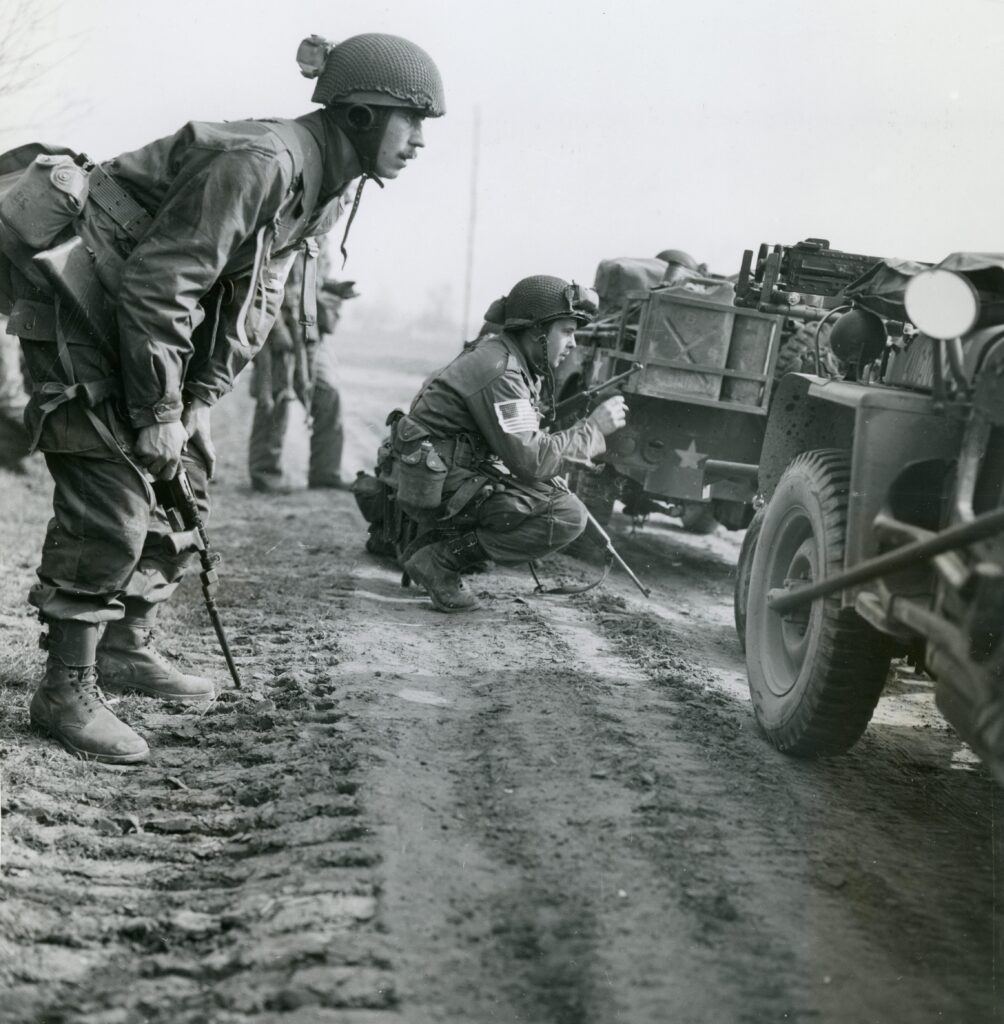
Corporal J. S. Glassford, 1st Airborne Corps Signals (left) after landing by glider at L.Z. ‘N’ during Operation Varsity. Like all of the British detachments that landed with 17th Airborne Division, he is wearing U. S. uniform and equipment but with his own helmet and carrying a Mark V Sten gun. This photograph is part of a series that includes Corporal Glassford, taken by a United States Army Signal Corps photographer (see the gallery below).
The exact location of the landing site of Chalk 32 is not known; it may have been at the southern part of 6th Airborne Division’s L.Z. ‘R’. Flight Officer Casella and Flight Officer Hanner were killed in action by ground fire soon after landing. Corporal Glassford and Signalman Beddington survived and were able to complete their task. For his gallantry during Operation Varsity Corporal J. S. Glassford was awarded the Military Medal:[11]
Corporal Glassford throughout the whole of the operation commencing on 24th March, when he flew in with 17th (United States) Airborne Division, gave a magnificent performance of efficiency and coolness under enemy fire. Having extricated himself from his glider, which was set on fire by a direct hit, he succeeded in reaching the correct rendezvous, without a map and under heavy enemy shell and mortar fire. He established contact with the rest of his party and then immediately made several patrols into areas held by the enemy to locate other gliders containing signal equipment vital to the success of air support communications. Having done this and being the senior N.C.O. remaining alive, he organised the establishment of his radio set. Throughout the succeeding days he never lost contact with Headquarters Second Army and air support could therefore be provided. By his bravery and devotion to duty he set a superb example to others.
Chalk 33 (CG-4A serial 42-56296)
Pilot: T-120251 Flight Officer Fredric Daniel Manget.
Co-Pilot: T-64962 Flight Officer Fred B. Lewis.
Passenger(s): Not identified (possibly Corporal J. Beresford who was killed in action).
Chalk 33 landed in the southern part of L.Z. ‘N’. Flight Officer Daugherty (Chalk 36) reported that Chalk 33 had been hit while descending to the L.Z. Flight Officer Manget and Flight Officer Lewis were later found dead while still strapped in their seats. The Missing Aircrew Report for this chalk is, itself, missing and the surviving reports account for all of the other aircrew and air support personnel killed in the landings; it is probable, therefore, that Corporal Beresford was the passenger in Chalk 33 and was killed in action on the approach to the LZ or just after landing.
Chalk 34[12] (CG-4A serial 43-37443)
Pilot: T-136236 Flight Officer Don Floyd Conover.
Co-Pilot: T-120429 Flight Officer Herbert Peter Holkestad.
Passenger(s): Not identified (possibly Corporal W. Ainsworth).
Chalk 34 landed at the western end of D.Z. ‘X’ where the aircrew and their passenger were pinned down by small arms, machine-gun and mortar fire for some time until the area was cleared by infantry and they could return to the glider to unload its Jeep (the partner to the trailer in Chalk 36), which was found to be undamaged. By the evening of 26 March Flight Officer Conover and Flight Officer Holkestad had returned to Poix. Unfortunately, their after-action reports make no mention of the passenger’s name. Both men survived the war.
Chalk 35[13] (CG-4A glider serial 43-40591)
Pilot: T-124233 Flight Officer Max Lee Hunt.
Co-pilot: O-780956 2nd Lieutenant Arnold Lester Holt.
Passengers: Lance Corporal A. Oldham and Lance Corporal L. A. N. Watkins.
The exact location of the landing site of Chalk 35 is not known but it appears from the description given by 2nd Lieutenant Holt that it was south of L.Z. ‘N’ and close to the Diersfordter Wald. The glider carried a communications trailer as cargo. It was hit by ground fire during the landing and then subject to machine-gun and mortar fire. Upon landing, Lance Corporals Oldham and Watkins kicked out the ‘V’ door immediately behind the pilot and scrambled out; they were followed by the pilot and co-pilot. Very soon after exiting the glider one of the British signallers was killed and soon afterwards Flight Officer Hunt was killed by mortar fire. 2nd Lieutenant Holt was then severely wounded by mortar and machine-gun fire and at this point the second British signaller stood up to surrender and was shot and killed. 2nd Lieutenant Holt was captured and taken to a nearby farmhouse where he was cared for by the German family there. That afternoon he was given first aid by United States troops but remained at the farmhouse until collected the next afternoon and evacuated; he survived the war. (See this account by Arnold L. Holt.)
Chalk 36[14] (CG-4A glider serial 43-36788)
Pilot: T-136240 Flight Officer Thomas E. Daugherty.
Co-pilot: O-2067055 2nd Lieutenant Morton Hassman.
Passenger: Signalman D. Berry.
The exact location of the landing site of Chalk 36 is not known but from the description given by Flight Officer Daugherty it is likely to have been at the western end of D.Z. ‘X’, south of the planned landing zone, 100 yards from Chalk 34. In addition to Signalman Berry, it carried a communications trailer as cargo; Chalk 34 carried the tentacle’s Jeep. The glider was hit by ground fire during the landing and then subject to machine-gun and mortar fire. Signalman Berry was killed in action by mortar fire immediately after landing while inside the glider. Flight Officer Daugherty and 2nd Lieutenant Hassman were wounded by a second mortar round and 2nd Lieutenant Hassman was severely wounded by a third explosion by which time the glider had been destroyed. A German patrol captured Flight Officer Daugherty who was unable to move 2nd Lieutenant Hassman due to his own injuries; prior to being led away he checked that Signalman Berry was dead. German medics went out from the command post where Daugherty was being held and brought in Hassman; although treated by a German medic, he died soon afterwards. Flight Officer Daugherty escaped captivity having persuaded several of his captors to surrender and rejoined United States forces near the landing zone; he survived the war. (See this report by Thomas E. Daugherty.)
Chalk 37[15] (CG-4A glider serial 43-40161[16])
Pilot: O-669832 1st Lieutenant Harry Joseph Drypolcher.
Co-Pilot: T-7340 Flight Officer James E. Lowe.
Passenger(s): Not identified (possibly the second Air Liaison Officer).
Chalk 37 landed at the southern end of D.Z. ‘X’ with Chalks 38-40. 1st Lieutenant Drypolcher and Flight Officer Lowe survived the landing, joined infantry on the L.Z. and assisted in guarding prisoners until they assembled with other pilots at the divisional headquarters. The following morning they crossed the Rhine and by the evening of 26 March had returned to Poix. Both men survived the war. Unfortunately, their after-action reports make no mention of the passenger’s name, although they noted that his reaction during the flight and during unloading was ‘calm’.
I have been unable to confirm which passengers were carried in in Chalks Nos. 31, 33, 34 and 37, but, given the detail contained in the surviving aircrew reports, it is probable that Corporal Beresford was in Chalk 33 and likely that the unidentified signalman was in Chalk 31, Corporal Ainsworth in Chalk 34 and the second air liaison officer in Chalk 37.
Corporal Ainsworth was wounded several days later on 28 March 1945. For his conduct at Headquarters 17th Airborne Division he was awarded the United States Bronze Star Medal: [17]
Corporal William Ainsworth was non-commissioned officer in charge of a tentacle with Headquarters 17th United States Airborne Division during the operations immediately following the crossing of the Rhine and was wounded in the arm by enemy shell fire. He, nevertheless, remained at his post and maintained communications without interruption. Throughout his attachment to Headquarters 17th United States Airborne Division he gave a valuable service both in the performance of his normal duties and also in liaison duties with the air staff of the division.
All the casualties were buried originally at the temporary United States cemetery at Margraten. The remains of Captain Gray, Corporal Beresford, Lance Corporals Oldham and Walker and Signalman Berry were reinterred at Venray War Cemetery, Netherlands in April 1947. The remains of the air crew were reinterred at Margraten when the permanent Netherlands American Cemetery was constructed there with the exception of Flight Officers Casella and Lewis, whose remains were repatriated in 1949 and reinterred at Long Island National Cemetery, New York and at Rose Hill Cemetery, Humboldt, Gibson County, Tennessee, respectively.
Acknowledgements:
The family of Arnold L. Holt for his report and photographs.
The National WWII Glider Pilots Association for the various crew reports.
Theo Vervoort at Stichting Adoptiegraven CWGC Venray War Cemetery for the photographs of Captain Gray and Lance Corporals Walker and Watkins.
1st Airborne Corps Signals on the landing zone:
-

- A stores trailer from 517th Signal Company being unloaded from glider Chalk 42 (in Serial A-19) that landed north of L.Z. ‘N’ on L.Z. ‘R’ in the 6th Airborne Division’s area after the L.Z. had been secured. Assisting (front left) is Corporal J. S. Glassford of 1st Airborne Corps Signals, who had landed elsewhere in Chalk 32. In the background is a damaged Horsa glider from 6th Airborne Division.
-

- The stores trailer of 517th Signal Company ready to be hitched to a Jeep. From left: Signalman E. T. Beddington, 1st Airborne Corps Signals (presumed); unknown U.S. serviceman; Captain David O. Jesberg, Commanding Officer, 517th Signal Company; Corporal J. S. Glassford, 1st Airborne Corps Signals.
-

- The stores trailer of 517th Signal Company hitched to a Jeep and ready to move off. Corporal J. S. Glassford, Royal Signals can be seen behind the Jeep.
-
- Corporal J. S. Glassford, 1st Airborne Corps Signals (left) after landing by glider during Operation Varsity. Like all of the British troops that landed with 17th Airborne Division, he is wearing U.S. uniform and equipment but with his own helmet and carrying a Mark V Sten gun.
1st Airborne Corps Signals
-

- Captain O. B. S. Gray, The Royal Fusiliers (City of London Regiment). Chalk 30
-
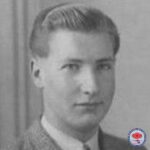
- Lance Corporal Frank Brookes Walker. Chalk 30
-
- Corporal John Stell Glassford M.M. Chalk 32
-

- Signalman Edward Thomas ‘Teddy’ Beddington. Chalk 32. The photo was taken before the war when he was serving with The Bedfordshire and Hertfordshire Regiment.
-

- Lance Corporal Arthur Oldham. Chalk 35
-
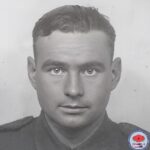
- Lance Corporal Leslie Albert Norman Watkins. Chalk 35
-

- Signalman Derrick Berry. Chalk 36
-
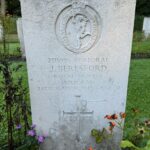
- The grave of Corporal J. Beresford, 1st Airborne Corps Signals at Venray War Cemetery
-

- The grave of Lance Corporal A. Oldham, 1st Airborne Corps Signals at Venray War Cemetery
-
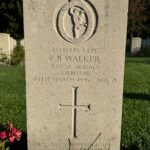
- The grave of Lance Corporal F. B. Walker, 1st Airborne Corps Signals at Venray War Cemetery
-
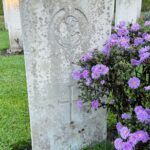
- The grave of Lance Corporal L. A. N. Watkins, 1st Airborne Corps Signals at Venray War Cemetery
-
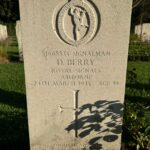
- The grave of Signalman D. Berry, 1st Airborne Corps Signals at Venray War Cemetery
61st Troop Carrier Squadron & 517th Signal Company
-

- 1st Lieutenant Gene E. Canova. Chalk 30
-
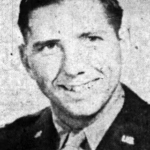
- 2nd Lieutenant Bruce Hoitt. Chalk 30
-
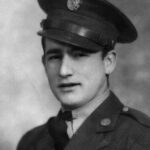
- Flight Officer Lyle E. Holland. Chalk 31
-
- Flight Officer Clement A. Casella. Chalk 32
-
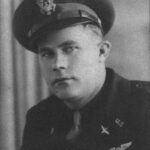
- Flight Officer Francis J. Hanner. Chalk 32
-
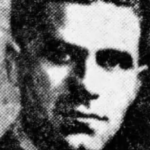
- Flight Officer Fredric D. Manget. Chalk 33
-
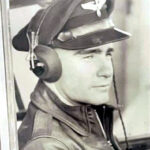
- 1st Lieutenant Arnold L. Holt. Chalk 35
-

- Flight Officer Max L. Hunt. Chalk 35
-

- 2nd Lieutenant Morton Hassman. Chalk 36
-
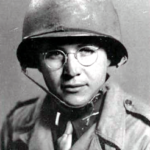
- Captain David O. Jesberg, Commanding Officer 517th Signal Company.
-
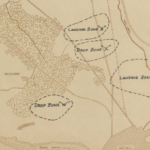
- 17th Airborne Division Drop & Landing Zones
-

- Operation Varsity Drop & Landing Zones
-

- The landing points for Chalk Nos. 21-40. Note that Chalks Nos. 30, 32, 35 & 36 are unaccounted for.
1. (Back) The ‘tentacles’ were attached to No. 2 Air Support Signal Unit from 1st Airborne Corps Signals for this task, rather than them being integral to No. 2 Air Support Signal Unit.
2. (Back) In addition to the Royal Air Force squadrons, Second Tactical Air Force had Australian, Belgian, Canadian, Czech, French, New Zealand, Norwegian and Polish squadrons.
3. (Back) United States Army. (July 1945). 17th Airborne Division Historical Report of Operation Varsity. p. 35. The war diary of 6th Airborne Divisional Signals records the arrival at Bulford of 6th Airborne Division’s four A.S.S.U. tentacles on 16 March 1945: ‘1800—ASSU tentacles arrive. 1 Sgt, 12 Operators. 4 Jeeps and trailers’. (United Kingdom National Archives (U.K.N.A.), WO 171/4163. War Diary 6th Airborne Divisional Signals, March 1945.)
4. (Back) Captain Gray would be mentioned in despatches for his earlier conduct during the North-West Europe Campaign. London Gazette 8 May 1945; 37072, p. 2462.
5. (Back) No. 38 Group Report on Operation ‘Varsity’. Appendix A, paras. 31a & b. That Appendix in the report by No. 38 Group R.A.F. may be read here.
6. (Back) Vlahos, M. C. (2020). The Rhine Crossing—314th Troop Carrier Group. Silent Wings Museum Newsletter, Vol. 19, No. 3, pp. 8-11. (See also Vlahos, M. C. (2019). “Men Will Come” A History of the 314th Troop Carrier Group 1942-1945. Self-Published: Lulu.)
7. (Back) For a breakdown of flying serials and their component units see 17th Airborne Division Historical Report. Op. Cit. Annex 2—Air Movement Table (Glider).
8. (Back) United States National Archives & Records Administration; Record Group 92: Records of the Office of the Quartermaster General; Series: Missing Aircrew Reports; 43-41167.
9. (Back) 53rd Troop Carrier Wing, 1 August 1944, Glider Pilot Interrogation Check Sheets for Holland and McCay.
10. 10. (Back) United States National Archives & Records Administration; Record Group 92: Records of the Office of the Quartermaster General; Series: Missing Aircrew Reports; 43-40163.
11. (Back) London Gazette 12 July 1945; 37172, p. 3594. (Incorrectly published as ‘John Still Glassford’.) Recommendation: U.K.N.A., WO 373/54/913.
12. (Back) 53rd Troop Carrier Wing, 1 August 1944, Glider Pilot Interrogation Check Sheets for Conover and Holkestad.
13. (Back) United States National Archives & Records Administration; Record Group 92: Records of the Office of the Quartermaster General; Series: Missing Aircrew Reports; 43-40591.
14. (Back) United States National Archives & Records Administration; Record Group 92: Records of the Office of the Quartermaster General; Series: Missing Aircrew Reports; 43-36788.
15. (Back) 53rd Troop Carrier Wing, 1 August 1944, Glider Pilot Interrogation Check Sheets for Drypolcher and Lowe.
16. (Back) 61st Troop Carrier Squadron Operation Order No. 69 of 24 March 1945 incorrectly records this glider as serial 42-40181.
17. (Back) London Gazette 17 October 1946; 37761, p. 5140. Recommendation: U.K.N.A., WO 373/147/461.
Amazing story!
My son in law, Major Louis Holt of the US Marine Corps and grand son of 1st Lieutenant Arnold L. Holt, Chalk No. 35, has done a great job of researching and documenting what happened that day. 1st Lieutenant Arnold L. Holt survived the heavy fire and terrible wounds and thanks to that I am privileged to have three beautiful grand kids who live in Germany today.
Pablo, My brother in law Ben and I met Louis and his comrade on Juno Beach at closing time in a bar during this year’s D-Day celebrations. After learning of Arnold’s incredible story and the sacrifices of his comrades, we connected him and his research to Nick. Which in turn led to this wonderful and moving tribute to those who deployed and gave their lives on Operation Varsity. Certa Cito; Semper Fidelis
Thanks Nick. A really interesting article that should be published in The Journal!
Thanks Mike. I was thinking the same!
My father 2nd Lieutenant Arnold L. Holt’s story was not written down until his later years of life. As a young man I knew very little of his war experience. He kept most of his story to himself even when I asked about the deep scars on his back and hip. I didn’t comprehend, at a young age, how those wounds even healed as they were large holes filled in with scar tissue. To this day, I cannot comprehend how he worked so hard to raise a family, my two sisters Jean, Carol, me and his beloved wife Florence of fifty four years of marriage. I never heard my dad, Arnie, as he was called, complain about his wounds. I know he was proud of his service in the war, and likewise, proud to be a World War ll veteran. I first became aware of more details of his war experience during my high school and college years as my father began to write things down, first by hand, and later with a typewriter. It piqued my interest and I found a lot of his war memorabilia such as patches, telegrams, letters, records, and medals. All such things are very precious to my generation and to the next. As much as possible, many of these things were digitized for their preservation. My son, Major Louis Holt, USMC was greatly inspired by 2nd Lt Arnold Holt which led to his military career in the US Marine Corps. It seems for American men and women that generations before continue to inspire love of country and deep patriotism. The storied past of American sacrifice ensures that the United States will always be strong and resilient in the face of tyranny, and stand strong against those who would seek to destroy freedom.
-Terry Holt
Terry, thanks you very much for your comments – much appreciated. I’m very pleased that Louis’ question to me about the British chaps led to this story being told.
Nick
Wonderful story Terry, thanks for sharing.
After Louis, it’ll be Oliver who carries on the legacy!