
(This is an updated version of a previous post from 2019.) Some time ago as I was working through one of the registers in my Royal Signals honours and awards project, I came across an anomaly. The obituary in The Wire for Major General A. C. Fuller C.B.E.—the inventor of the Fullerphone—records that he was mentioned in despatches four times and that he did not receive the Victory Medal. These statements are at odds—if he did not serve in a theatre of war he could not have been mentioned in despatches. There are some exceptions to that statement, but Experimental Officers at the Signals Experimental Establishment were not amongst them. A little more digging revealed that these were ‘class ‘B’ mentions’ for ‘valuable services in connection with the war’. I was unable to track them down easily, however, and this post is the result of my research into where such awards may be found.

An extract from War Office List of 23 August 1919 showing Scottish officers. (The Courier, 23 August 1919.)
Meritorious service by military personnel and civilians at home was recognised largely only in the latter years of the war, primarily by the various grades of the Order of the British Empire, created in June 1917. In addition, a lower category of commendation, broadly the equivalent of a mention in despatches, was awarded to those who were brought to notice for ‘valuable services’. They are often referred to as ‘class ‘B’ mentions’. Most were for service in the United Kingdom, but some awards were made for service in the Dominions and Colonies. They were usually awarded in the name of the Secretary of State for War but several were attributed to the Home Secretary.[1]
Although the War Office, Air Ministry and Home Office lists, or communiqués, were described as supplements to the London Gazette, they did not appear in the Gazette but were instead provided to the press for publication. Extracts may be found in regional newspapers, often highlighting the work of local recipients with short citations, but The Times became seen as the ‘official’ avenue of publication because it featured the full lists. The first War Office communiqué appeared in February 1917 and the last in June 1920. Similar lists were announced by the Admiralty, although they do not appear to have been published by The Times in the same way.[2]
Several lists were not published in The Times. Inexplicably, the list of 23 August 1919—Army officers and other ranks rewarded for service in departments of the War Office—was published in full only in The Daily Telegraph, and the accompanying (very large) list of 28 August—for service in the commands and districts of Home Forces—was only published in part; again it was published in full in The Daily Telegraph. Of the five communiqués in 1920, only two were published in full. Three lists, amounting to around 2,200 names, were announced in The Times in a short paragraph but without any accompanying names. It appears that the press quickly lost interest in these rewards for service because those in the final list do not even appear in regional newspapers.
In early 1920 a bronze spray of oak leaves was authorised for wear by those who had been mentioned in despatches (to be worn on the Victory Medal and retrospective to the beginning of the war), but no such emblem was authorised for class ‘B’ mentions. They were recorded, however, in the service records of military personnel and many civilian organisations, such as the Red Cross, produced certificates for presentation to recipients.

An extract from the service record of 924 (Acting) Company Quartermaster Sergeant George Dennis Ruggles, who was rewarded for his service with the Household Brigade Officer Cadet Battalion at Bushey in Hertfordshire and brought to notice on the War Office list of 25 March 1919.

The certificate from the Joint Committee British Red Cross and Order of St. John presented to Miss Jessie Bell McDonald. Photo: Dundee City Archives
Attached here are details of each of the lists—the date of the communiqué, the categories of those rewarded for their service, the ‘citation’ as published in The Times (which may differ in minor ways from that of the communiqué), the details of when the list appeared in The Times, and when additions and corrections were published. The relevant pages of The Times may be accessed at The Times archive, which requires a subscription. Regional newspapers may be searched on sites such as The British Newspaper Archive or Newspapers.com.
In the gallery is a selection of recipients, with some details as to why their service was rewarded.
-

- Lieutenant Albert Frederick Floyd, The Royal Warwickshire Regiment later transferred to the General List; brought to notice for his service with the Ministry of Munitions, with which he served throughout the war.
-

- Lieutenant Colonel Frederick Hibbert Westmacott F.R.C.S., T.D., Royal Army Medical Corps, (1867-1935) commanded 2nd Western General Hospital in the Manchester area from October 1915 to April 1917 before moving to France, where he commanded No. 57 General Hospital. His name was included in the additions to War Office list of 24 February 1917 published on 5 April. For his war service he was made C.B.E. in 1919 (L.G. 3 June 1919; 31370.)
-

- Domini, Lady Crosfield, Highgate V.A.D, Byculla Auxiliary Hospital, London; and Miss Marjorie Dodds, Miss Rosalind Parker and Miss May Caldwell all of the British Red Cross Society, Whitecross Hospital, Warrington. Lady Crosfield was brought to notice for a second time on the list of 29 January 1918, awarded the Royal Red Cross, 2nd Class in 1918 (L.G. 21 June 1918; 30758) and appointed a Chevalier of the Order of George I by the King of Greece in June 1920 (L.G. 31 May 1920; 31928). She was appointed to the Order of Beneficence (Greece) in 1951 for her service during the Second World War (L.G. 3 August 1951; 39302). Miss Dodds fiancé, Captain Stanley Burnett Kay, Royal Flying Corps was killed in a flying accident in January 1918 a week before their planned wedding.
-

- Miss Madeline Antoinette Grace Saunders, brought to notice for her work in managing her former nursing home, St. Tudno Hospital, Llandudno, that was converted into a hospital for 180 men. She was awarded the Royal Red Cross, 2nd Class in June 1918 (L.G. 21 June 1918; 30758).
-

- Left: Lieutenant Leonard Frank Bigland, The Cheshire Regiment brought to notice for his endeavours in support of the Birkenhead bantam battalions (15th (Service) Battalion (1st Birkenhead) and the 16th (Service) Battalion (2nd Birkenhead), The Cheshire Regiment) and later as a recruiting officer in that region. Right: Major William Thomas Marshall V.C. had been decorated for his bravery as a Quartermaster Sergeant with 19th Royal Hussars (Queen Alexandra’s Own) during the Mahdist War in 1884. He was brought to notice for his work with the Fife Territorial Force County Association and the mobilisation of the men of the county’s National Reserve.
-

- Major Alexander Charles Farquharson M.D., Royal Army Medical Corps was brought to notice twice for his work as Deputy Director Medical Services, Northern Command. A barrister in addition to being a doctor, he was the Member of Parliament for North Leeds from 1918-1922.
-

- Sister Miss Sara Burnley, Auxiliary Military Hospital, Ilkley, and Probationer Nurses Miss Dorothy Forster and Miss L. S. Sargent, St. Luke’s Hospital, Bradford. All were mentioned in the War Office List of 18 October 1917.
-
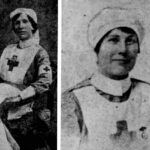
- Four nurses from Oxfordshire brought to notice on the War Office list of 18 October 1917: Matron Miss E. M. Jones, T.F.N.S, Matron at Wingfield Auxiliary Hospital, Headington; Miss F. M. Day, Quartermaster at Banbury Auxiliary Hospital; Miss C. M. C. Hill, Acting Quartermaster at Banbury Auxiliary Hospital; and Miss Laura Fowler, for her treatment of ‘shell shock’ victims at 4th London General Hospital.
-

- Major Algernon Clement Fuller, Corps of Royal Engineers Signal Service was brought to notice for his work as an experimental officer at the Signal Experimental Establishment on four occasions. For his war service he was made Brevet Major in 1918, appointed Cavalier in the Order of the Crown (Italy) (L.G. 25 March 1918; 30595) and Chevalier in the Legion d’Honneur (France) (L.G. 14 July 1919; 31454). For his work at the Signal Experimental Establishment he was made O.B.E. in 1923 (L.G. 2 June 1923; 32830) and for his work as Director of Royal Engineers and Signal Equipment in the Ministry of Supply during the Second World War he was made C.B.E. in 1941 (L.G. 1 January 1941; 35029), after which he retired.
-

- 29589 Corporal Charles John Bayzand, Royal Air Force, brought to notice in the Air Ministry list of 14 June 1918 for his work as a photographer. Prior to the war he was the assistant to the Professor of Geology at the Oxford University Museum and after the war he returned to the university earning a First Class Honours degree in geology and later an M.A.
-

- 1506 Warrant Officer Class II (Regimental Quartermaster Serjeant) George Henry Vooght, Machine Gun Corps, (1872-1949) a former sorting clerk and telegraphist with the General Post Office in Exeter. He was brought to notice on the War Office List of 13 August 1918 for his service with the newly formed Tank Corps.
-

- Miss Winifred Hills of Wealdstone, north London, was brought to notice in the War Office list of 7 March 1919 for her work in the Department of the Director General of Movements and Railways. She was well known in Harrow for her comedic talent in local amateur theatre productions.
1. (Back) Although a few lists of men mentioned in despatches having been, ‘brought to the notice of the Secretary of State for War’ for services in France and Flanders had been published in the London Gazette prior to 1917, the first mentions in despatches for service in the United Kingdom were for the Easter Rising in Dublin in April 1916. They were published in January 1917 as being ‘brought to the notice of the Secretary of State for War for distinguished services rendered in connection with the War.’ (L.G. 25 January 1917; 29919. An additional list was published in L.G. 30 March 1917; 30005. The accompanying honours, decorations and medals had been published in an earlier Gazette—L.G. 24 January 1917; 29916.) Subsequently, mentions in despatches for service in the United Kingdom were awarded primarily to those (including pilots) engaged in anti-aircraft defences.
2. (Back) Recipients on Admiralty lists in 1919 are described as having been, ‘…brought to the notice of the Admiralty for valuables services in the prosecution of the war…’
3. (Back) The accompanying list of those who were mentioned in despatches, ‘for valuable services rendered in connection with anti-aircraft services in the United Kingdom’ was published in the London Gazette on 20 December 1917; 30439.
4. (Back) The accompanying list of those awarded decorations, medals and mentioned in despatches, ‘for valuable services rendered on the occasion of the sinking or damage by enemy action of Hospital Ships, Transports and Store Ships’ was published in the London Gazette on 6 September 1918; 30886.
5. (Back) The accompanying list of Honours for, ‘valuable services rendered within the Union of South Africa in connection with the Campaign in German South-West Africa and German East Africa’ was published in the London Gazette on 19 December 1918; 31075.
6. (Back) The accompanying list of those mentioned in despatches, ‘for valuable services rendered in connection with anti-aircraft services in the United Kingdom’ was published in the London Gazette on 20 February 1919; 31193.
7. (Back) The accompanying list of those receiving honours and medals for, ‘for valuable services rendered during the War in Military Record Offices in the United Kingdom’ was published in the London Gazette on 15 March 1919; 31232 (with honours to date from 1 January 1919).